Visibility
Nothing at the hood tells researchers how much energy an open sash uses.
 Loading the hood
2026 SMART CAMPUS CHALLENGE WINNER
A little less open.
A lot more possibility.
01 / THE INVISIBLE COST
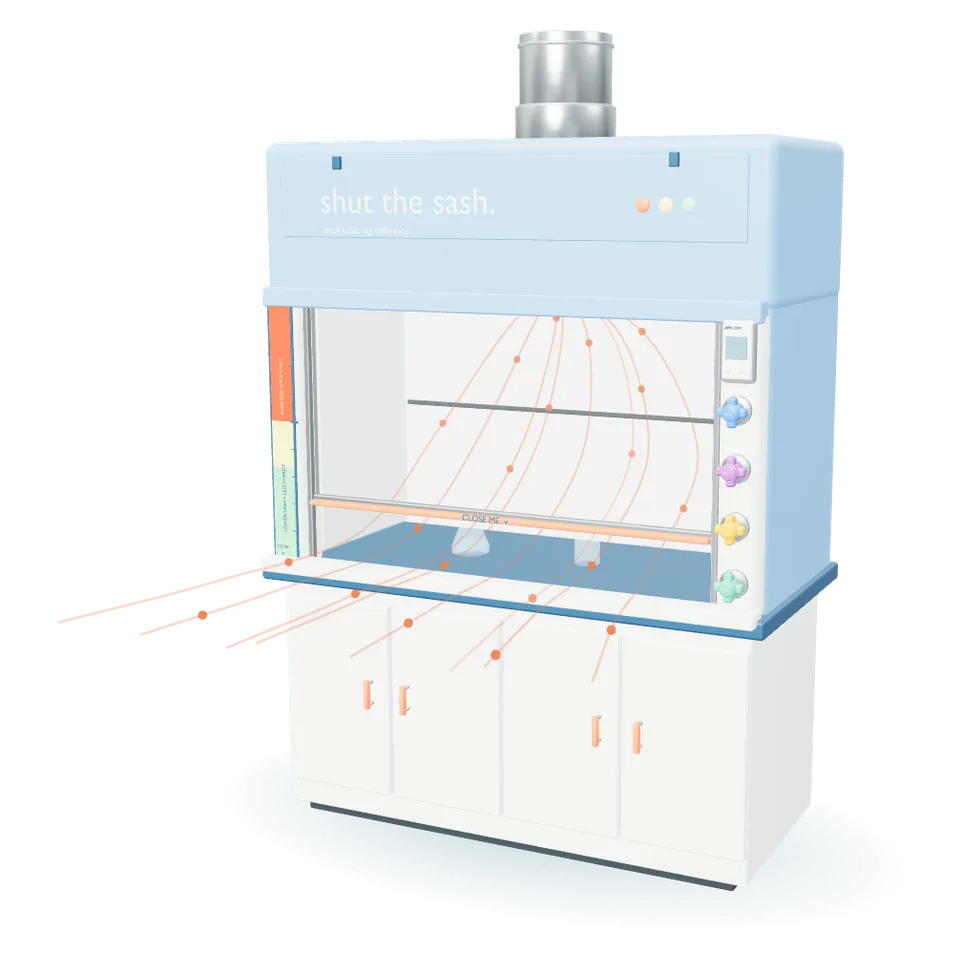
A fume hood pulls air away from the work inside. That air has already been filtered, heated or cooled—and the building must replace it. Leaving the sash open keeps that demand going.
Watch the streams multiply as the sash rises.
02 / RIGHT WHERE IT MATTERS
A simple sticker turns an invisible habit into a visible choice. Close the sash when you step away.
03 / YOUR LITTLE LAB
Open it. Close it. See the difference.
Baseline 150 CFM; up to 650 additional CFM × opening fraction × open hours. Energy factor 1.8 W/CFM; electricity $0.13/kWh; 365 days. These are demo assumptions, not measured project savings or safety guidance.
THE APPROACH
Leaving a fume hood sash open is expensive, and nobody in the room can tell. Our approach pairs measurement with education, so researchers can see the impact of a small daily action.
The original site’s bottom-up estimate assumes a 12-inch sash opening for 8 hours a day: about $615 per hood per year, across 1,876 hoods. It uses airflow = width × opening height × face velocity, approximately 1.8 watts per CFM, and $0.13/kWh.
This is an estimate, not measured Ohio State energy use. It excludes the cost of conditioning replacement air. The interactive calculator above uses its own disclosed demonstration assumptions.
Study cited by the original site ↗Nothing at the hood tells researchers how much energy an open sash uses.
If the habit isn’t taught during onboarding, it is easy to miss.
Building totals alone don’t show a lab where it can improve.
01 / MONITOR
The pilot’s monitoring approach draws on OSU’s existing enteliWEB building dashboard for sash position and energy data. No new sensors or extra hardware to maintain.
A per-lab view is designed to show closure rates over time and help facilities identify where to focus.
Watch the dashboard walkthrough ↗02 / EDUCATE
Hood-mounted stickers mark sash-height guidance. A BuckeyeLearn onboarding module explains why closing unused hoods matters, while lab-level feedback and leaderboards help the habit stick.
Overnight, during breaks, or whenever you step away: make closing the sash part of finishing your work. Follow your lab’s approved operating guidance.
The original site collected examples from Harvard, MIT, UVA, Chicago, Caltech, UC Irvine, and Illinois, alongside a peer-reviewed sticker-and-feedback study. These programs use different buildings, methods, and measures; their results are not Ohio State pilot results.
The Illinois example is an important distinction: lower sash heights did not translate into a measured building-energy reduction relative to the previous year. Our pilot needs to measure both behavior and energy use.
THE PROJECT / PROGRESS
in project funding from ENGIE
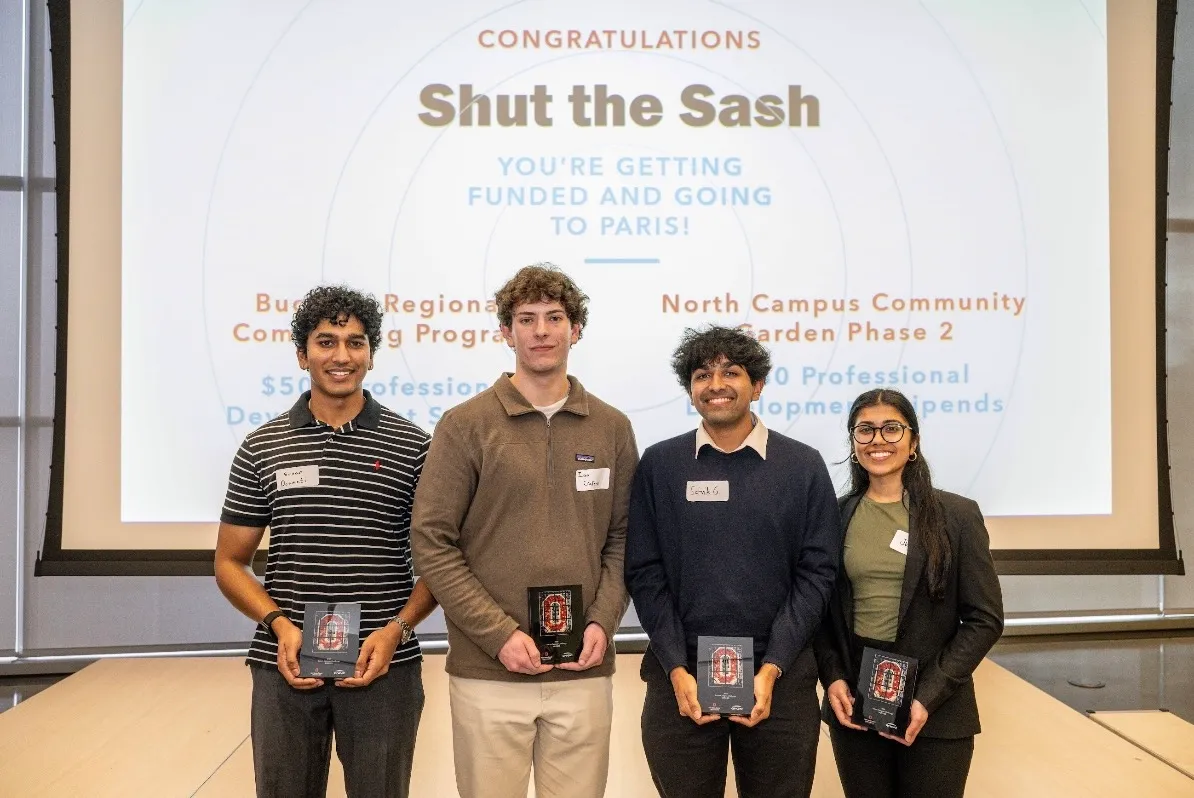
Smart Campus Challenge winner
Support to turn a simple habit into a campus pilot—and an opportunity to share the idea with ENGIE in Paris.
July 2026–June 2027 · Status from the original site’s August 2026 update.
July 2026 · Complete
August–October 2026 · In progress
November–December 2026 · Planned
January–June 2027 · Planned
The baseline audit wrapped in the CBEC pilot bay, establishing closure rates and energy use for comparison. Sticker and signage production was underway, and the BuckeyeLearn module was in review with lab safety.
THE PEOPLE / ABOUT
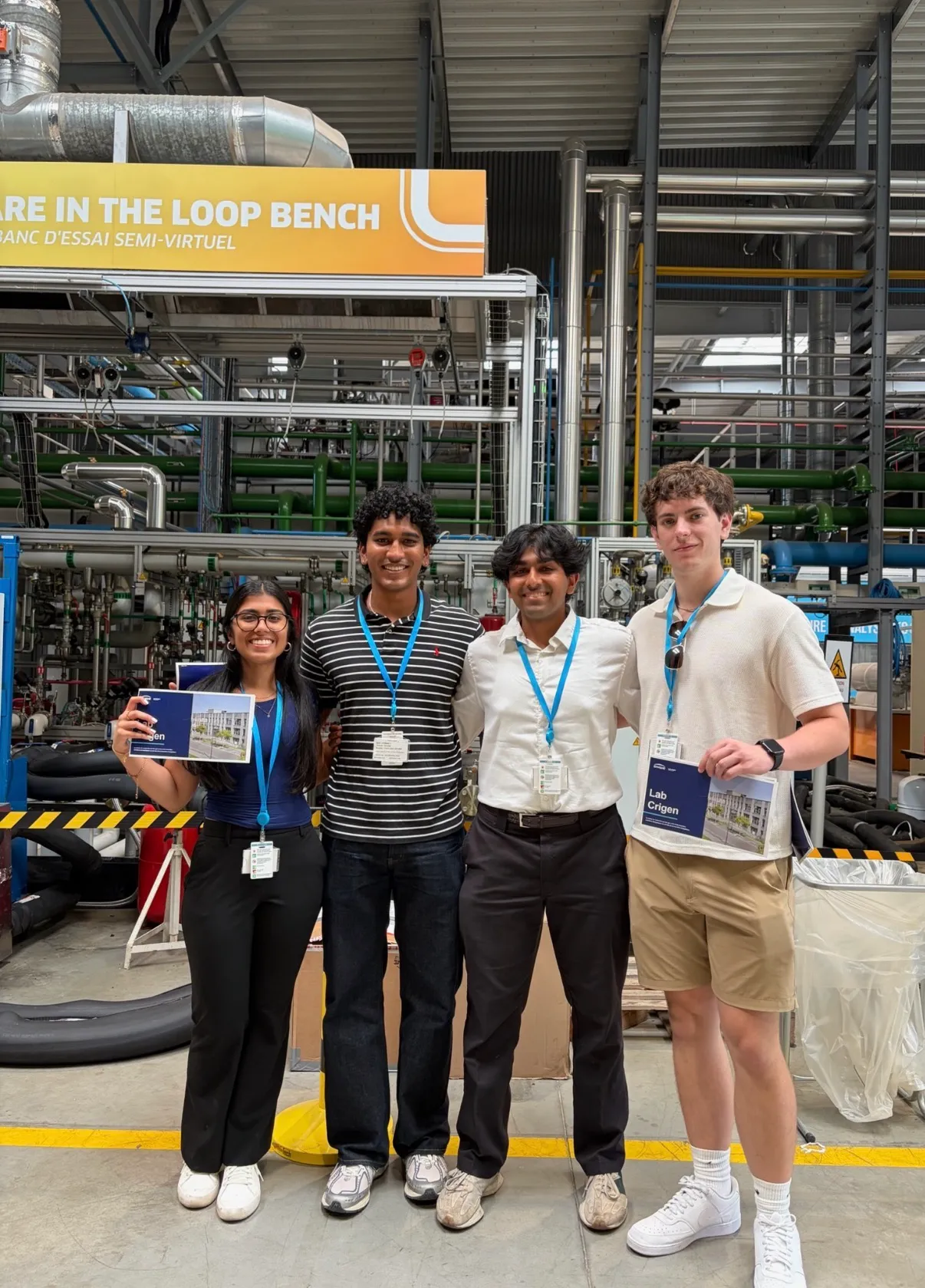
We’re Ian, Suvan, Satvik, and Juhi: four Ohio State students working on a familiar but often overlooked problem—fume hoods left open.
Our project began in late 2025, after a conversation with an OSU medical professional about the energy used to treat hospital air. It made us look more closely at our own labs and the equipment we use every day.
We first looked for a technical fix. Our research gradually pointed to a simpler barrier: our peers hadn’t been taught how much closing the sash could matter.
You’re taught to turn off the tap and switch off the lights. We want “shut the sash” to feel just as natural.
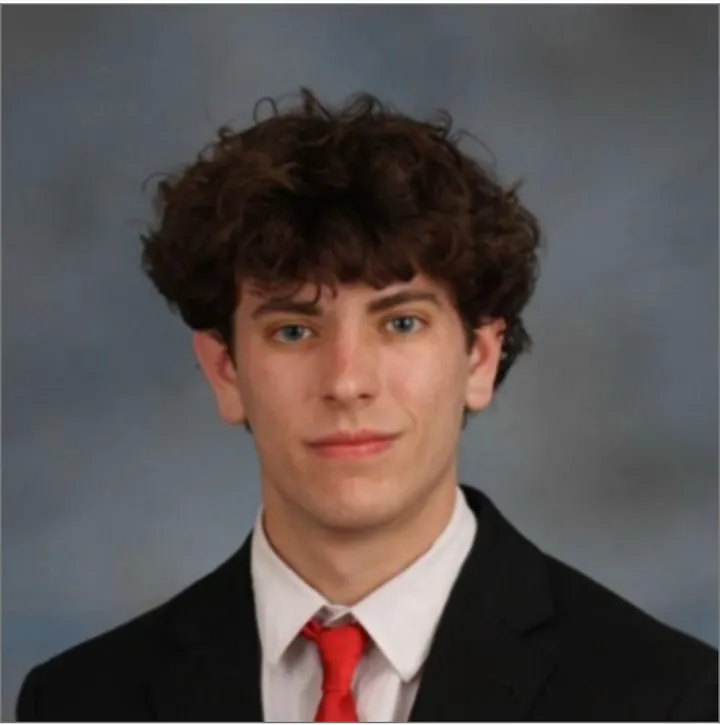
Project Manager

Data & Engineering

Education & Outreach

Operations
OHIO STATE → PARIS
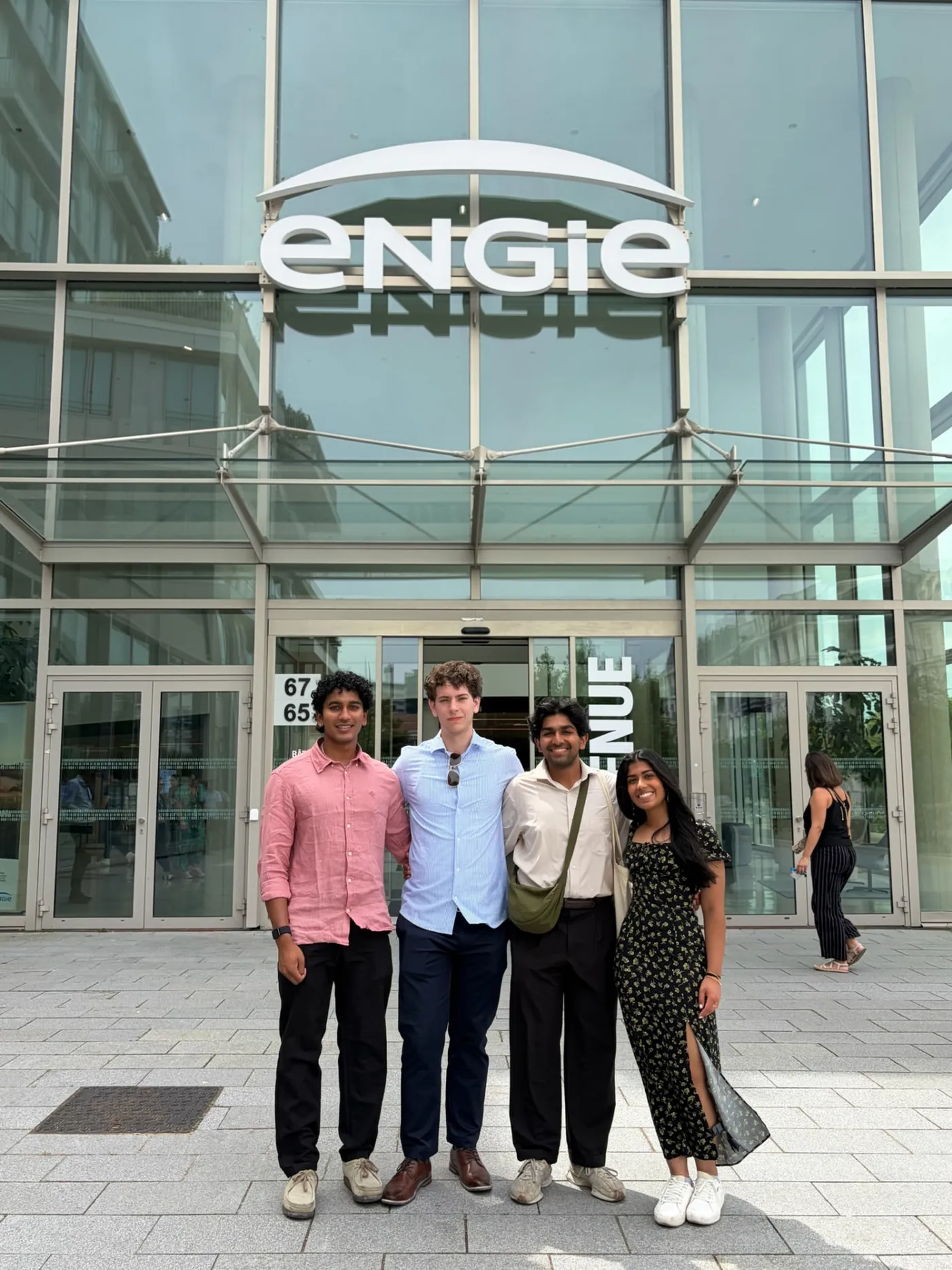
Winning the Smart Campus Challenge brought the team to ENGIE’s global headquarters in Paris. We presented Shut the Sash to engineers and sustainability leads, toured the campus, and discussed how behavior-change programs could scale across campuses and corporate portfolios.
The visit gave us a broader view of the work—and even more motivation to bring it back to our own labs.
OUR BACKING
Ohio State’s energy partner and sponsor of the pilot, supporting the project with technical guidance and access to campus building systems.
THE OPPORTUNITY
The university competition that selected Shut the Sash as its 2026 winner and funded the pilot’s first year.
GET INVOLVED
If you run or work in an Ohio State lab and want your hoods included in the next phase, we’d like to hear from you. Questions, feedback, and ideas from other campuses are welcome too.
shutthesashosu@gmail.com ↗